Two Saudi Scientists Among Six Arab Female Researchers Honored by the 2026 L’Oréal-UNESCO For Women in Science Middle East Programme
- Views: 1

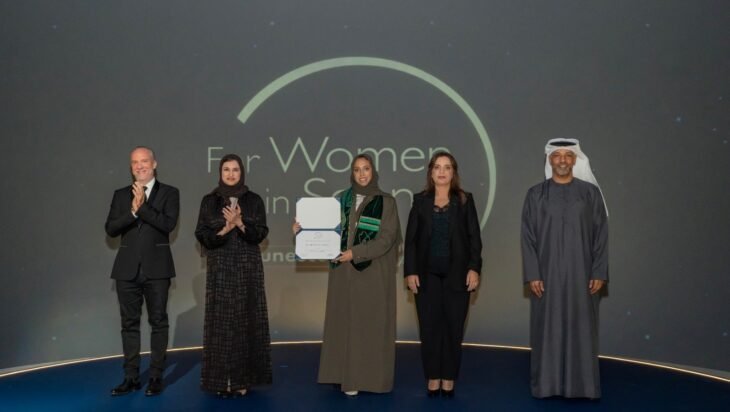
• Two researchers awarded from the Saudi Arabia, Dr. Aljawharah Alrubayyi and Alaa Mansour Almushaikeh, bringing the total to 19 researchers recognized from the country.
• This year’s researchers are recognised for scientific excellence across healthcare, pandemic preparedness, water security, advanced materials and sustainable technologies.
• Marking 13 years of impact, the programme has supported 69 Arab female researchers with over SAR 4 million in endowments.
• By advancing women’s participation and leadership in science, the programme supports regional priorities focused on research, innovation and human capital development.
Saudi Arabia, October 22nd, 2026: Six pioneering Arab female researchers from Saudi Arabia and the GCC have been recognised at the 13th edition of the L’Oréal-UNESCO For Women in Science Middle East Programme. Their work addresses pressing regional and global priorities, from infectious diseases and personalized medicine to water security, advanced materials and sustainable technologies.
Since its regional launch in 2014, the programme has supported 69 Arab women researchers with over SAR 4 million in endowments, helping them advance scientific careers and strengthening women’s contribution to the region’s research and innovation ecosystem. Two Saudi-based researchers are among this year’s honourees, bringing the number awarded from the Saudi Arabia through the programme to 19.
Women account for 41% of researchers in the Arab States, according to UNESCO data, placing the region above the global average for women’s participation in research. Sustaining this momentum requires continued investment in the pathways that enable women to progress through every stage of a scientific career and move into positions of scientific leadership.
Reflecting on L’Oréal’s role in advancing this ambition, Laurent Duffier, Managing Director of L’Oréal Saudi Arabia, said: “The scientific talent we see emerging across the region is remarkable, and women are increasingly at the heart of that progress. Our responsibility is not only to recognise that talent, but to help create the visibility, networks and opportunities that allow it to thrive. For 13 years, this programme has supported Arab female researchers at different stages in their careers, because strengthening their contribution to science also strengthens the region’s capacity for innovation and its knowledge-based economy.”
Emphasising the importance of inclusive participation in science, Salah Khaled, Director of UNESCO, Doha Office for Gulf States and Yemen, stated: “The future of science must be shaped by the full diversity of talent within our communities. At UNESCO, empowering and enabling women and young talent to become changemakers is central to our work. We are honoured to champion this initiative alongside L’Oréal and support a new generation of Arab female researchers whose discoveries can contribute to scientific progress and address challenges that transcend borders.”
Six Arab women researchers recognised in 2026
This year’s six researchers reflect the growing contribution of Arab women in STEM to developing practical solutions to challenges with relevance both to the region and the world, such as healthcare, pandemic preparedness, water security and sustainable technologies. The six outstanding researchers recognised in 2026 are:
PhD students:
• Alaa Mansour Almushaikeh (Saudi Arabia) – For her research on developing next-generation radiation-detecting materials for safer x-ray imaging.
• Jawaher Alhammadi (United Arab Emirates) – For her research on engineering cell models for more personalised medicine.
• Hadeel Tarik Zedan (Qatar) – For her research on developing next-generation antivirals for coronaviruses and emerging respiratory viruses.
Post-doctorate researchers:
• Dr. Aljawharah Alrubayyi (Saudi Arabia) – For her research on harnessing human immunity to advance vaccines and immunotherapies against viral infections.
• Dr. Marieh Bassam Al Handawi (United Arab Emirates) – For her research on learning from desert plants to improve water security in the Middle East.
• Dr. Sara Al-Araimi (Oman) – For her research on turning waste into cleaner water and new bio-based materials.
Sharing her perspective on this year’s selection, Prof. Marie Abboud, President of the program’s jury, said: “Behind this year’s record number of applications are hundreds of women with bold scientific questions and ideas for the future. What impressed us as a Jury was not only the exceptional calibre of the candidates, but the breadth of their ambitions. The six winners remind us that science moves forward when women are given the opportunity to know, think and dream. Supporting them means investing in scientific excellence, discoveries and leadership that will shape our region’s future.”
The 2026 awardees were selected by a distinguished 11-member jury of leading scientists and academics from across the Middle East, chaired by Prof. Marie Abboud (Saint Joseph University, Lebanon) and including Dr. Habiba Al Safar (Khalifa University of Science and Technology, United Arab Emirates), Dr. Maha Al Mozaini (Research, Development and Innovation Authority, Saudi Arabia), Dr. Saba Al Heialy (Mohammed Bin Rashid University of Medicine and Health Sciences, United Arab Emirates), Prof. Fatma Taher (Zayed University, United Arab Emirates), Prof. Abeer AlBawab (The University of Jordan, Jordan), Prof. Rihab Nasr (American University of Beirut, Lebanon), Dr. Nazek El-Atab (King Abdullah University of Science and Technology, Saudi Arabia), Dr. Roula El Hachem Wassef (Saint Joseph University, Lebanon), Dr. Rania Dghaim (Zayed University, United Arab Emirates), and Dr. Hanifa AlBlooshi (Khalifa University of Science and Technology, United Arab Emirates).
Celebrating 13 years of impact, the L’Oréal-UNESCO For Women in Science Middle East Programme champions Arab female researchers, highlighting their vital role in driving scientific progress and a sustainable future. As part of the global programme, which has recognized over 5,000 female researchers across more than 140 countries, including seven Nobel Prize winners, these women embody the belief that ‘the world needs science, and science needs women.’
You Might Like